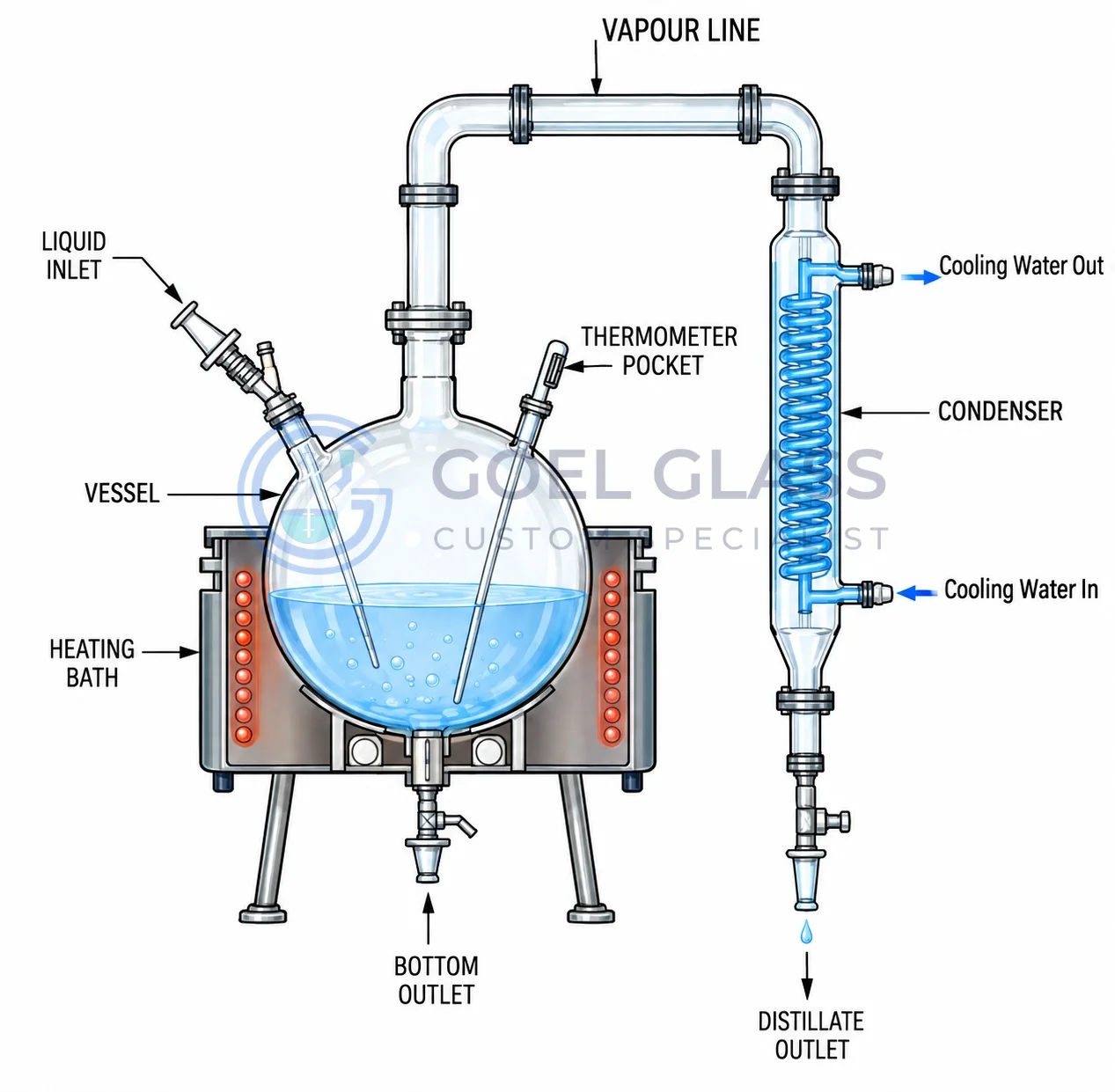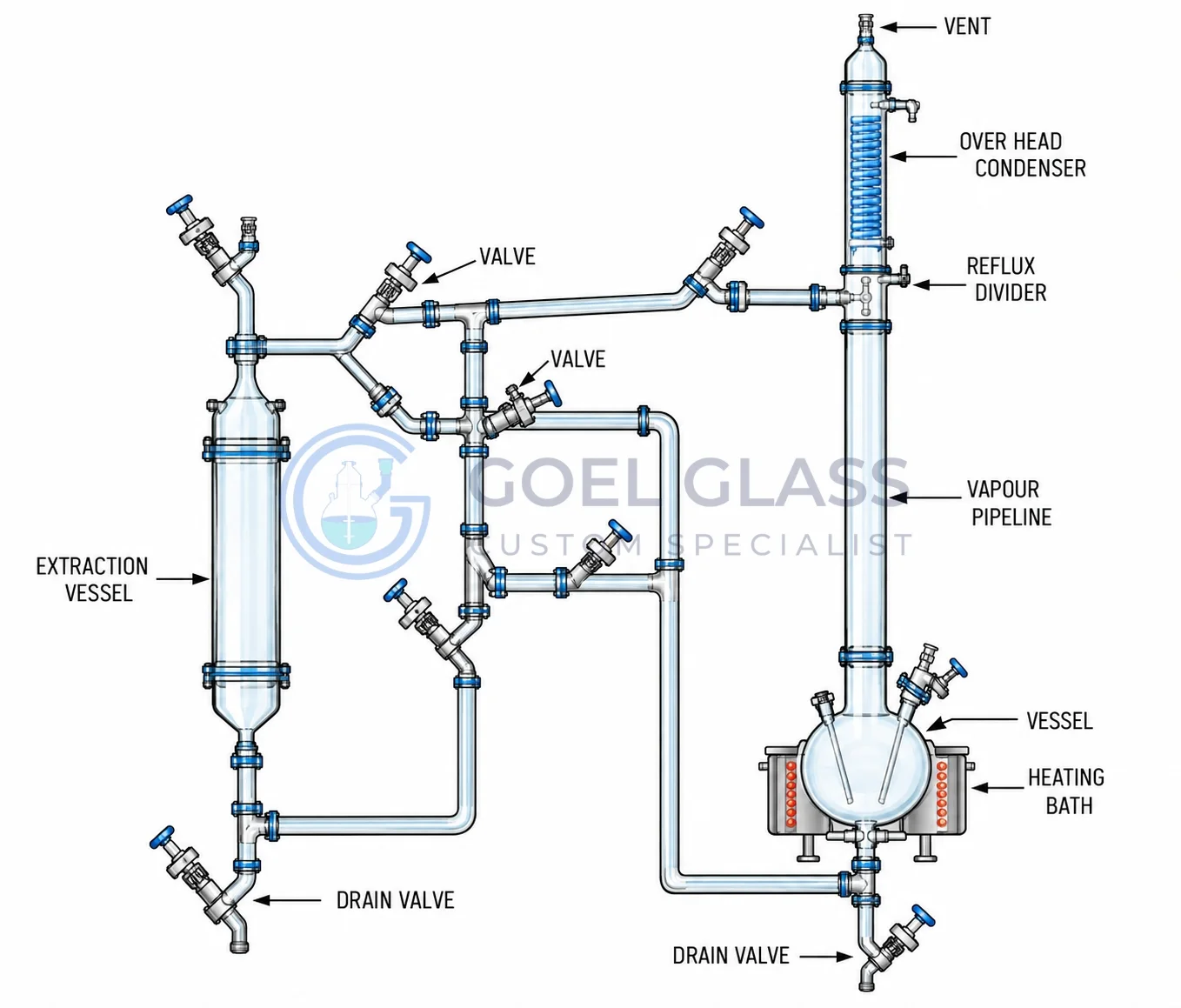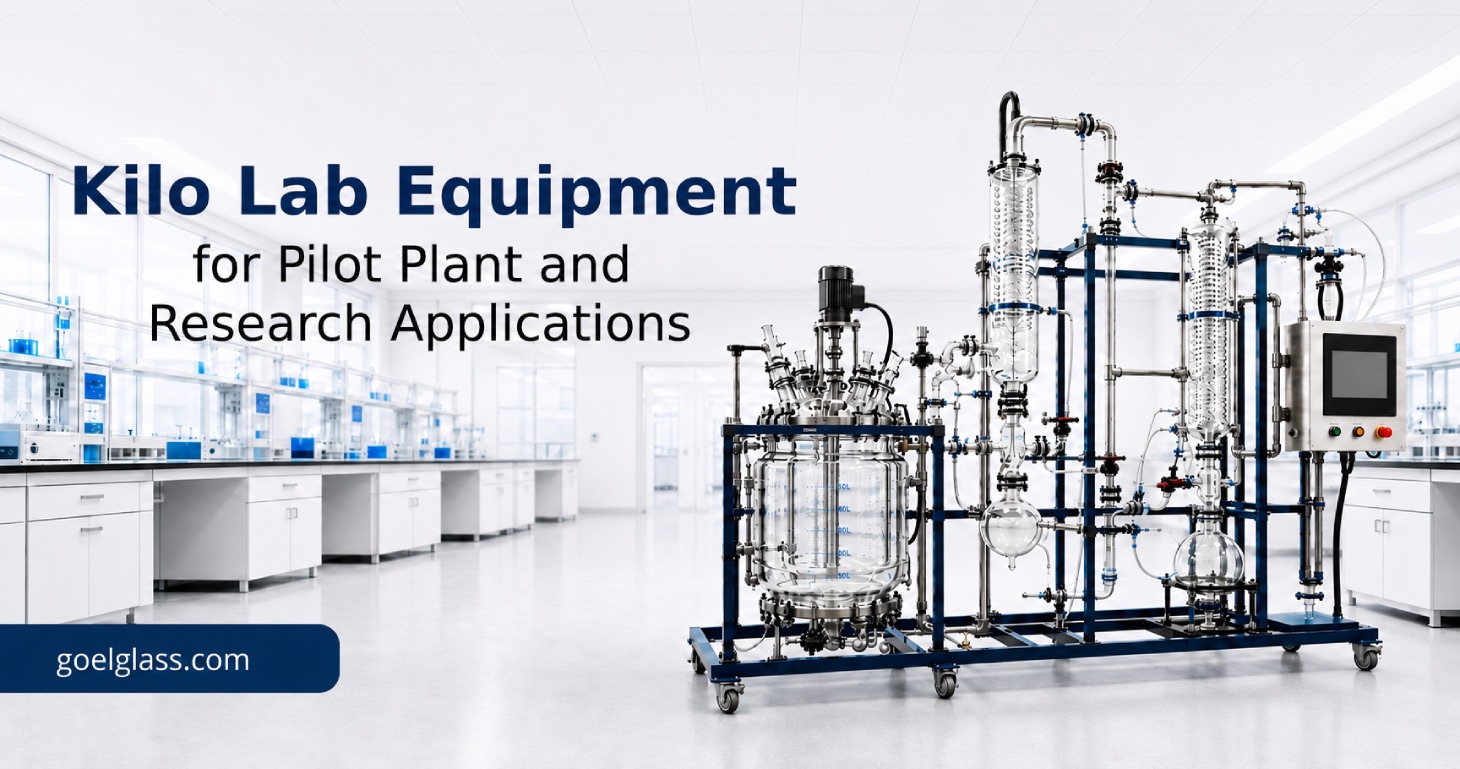
A pilot plant floor rarely stays static for long. An assembly piped for a straightforward solvent extraction during initial testing might require completely different vapor routing by the very next batch.
Moving from small-scale testing into active pilot workflows requires hardware that can handle these rapid layout changes. Rigid installations quickly become a liability on the floor. Keeping a facility moving means sourcing kilo lab equipment built specifically to reconfigure when the process demands it.
The Reality of Changing Pilot Configurations
In an active research environment, the layout changes constantly.
Operators frequently adjust glass assemblies between stages. A minor change in a trial often means rerouting a condensation path. Sometimes it requires adding a secondary condenser entirely. Flexible pilot plant equipment allows operators to swap these connections without dismantling the entire structural footprint. It is strictly about adaptability on the floor.
Glass Reactors and Process Assemblies
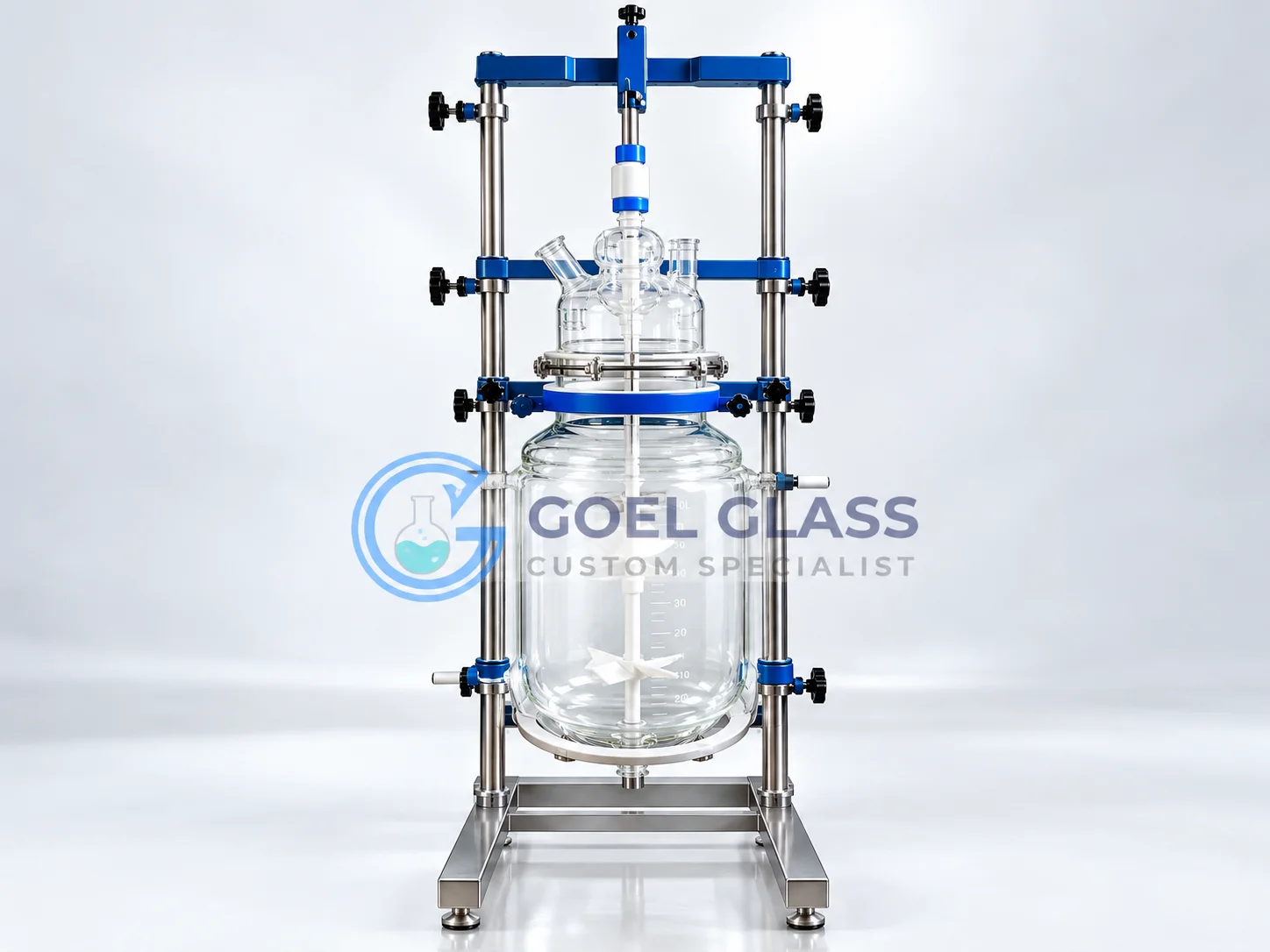
The central hub of these setups usually revolves around glass reactors. Jacketed glass reactors provide the necessary structural volume and visibility for active batches. But the primary vessel is just the starting point.
Depending on the trial, different modules of industrial glassware must integrate directly with that main reactor. As a specialized supplier, Goel Glass Inc distributes the exact components required to build out these specific assemblies.
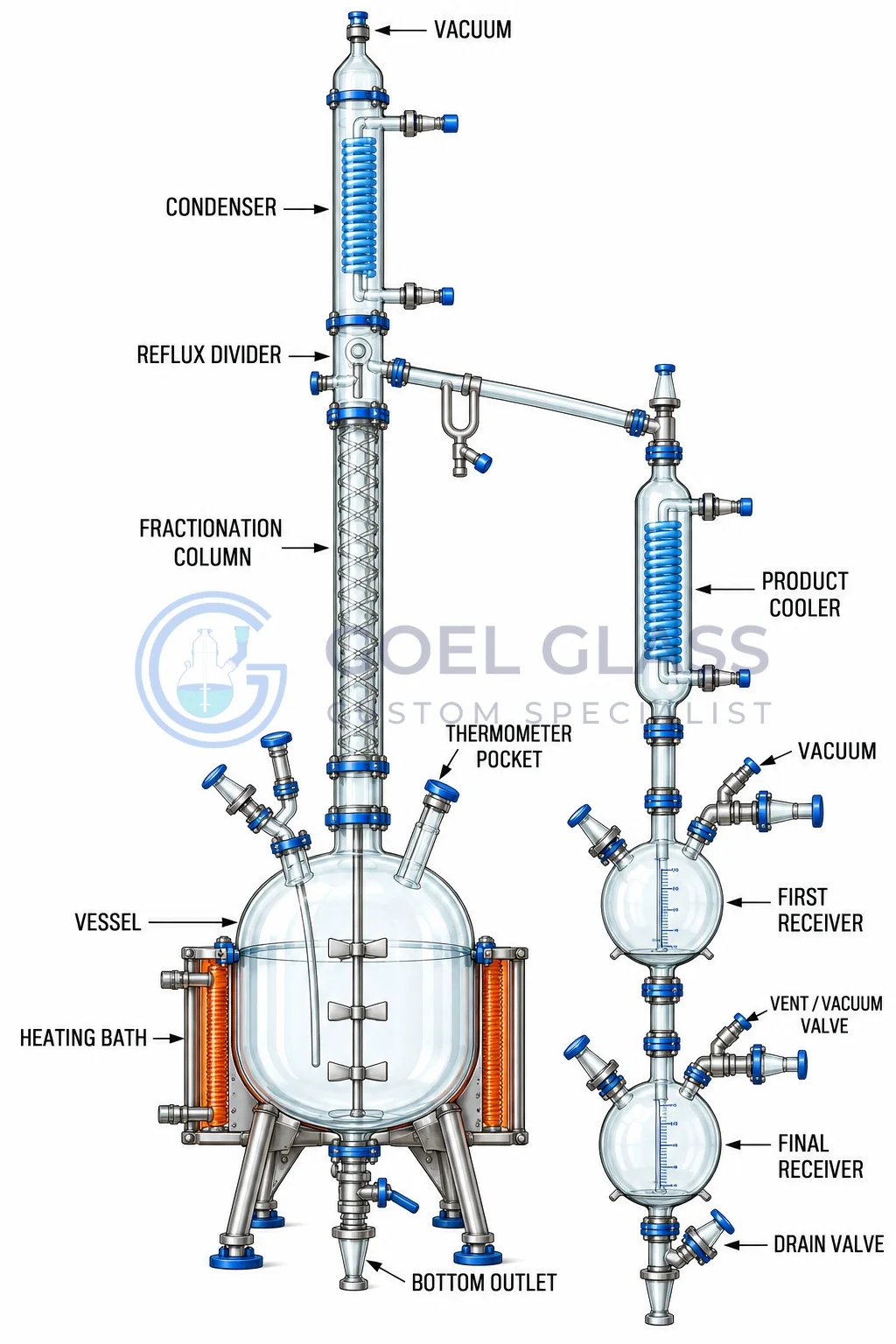
Operators connect distillation units or dedicated extraction units directly to the framework. For heat-sensitive processing, facilities often bypass standard distillation entirely. Instead, they rely on wiping film evaporators or rotary evaporators. Downstream vapor recovery utilizes high-capacity condensers. Once a batch finishes, operators frequently move the material through nutsche filters for solid-liquid separation.
Managing Thermal and Vacuum Loads
Moving up to kilo lab reactors changes how a system handles temperature and pressure.
Jacketed vessels circulate heat transfer fluids to maintain stability across an operating range of -20°C to 200°C. Prolonged pilot runs rely on the jacket to compensate for thermal changes directly at the vessel wall during the batch. Vacuum operation is also standard here. It is typically used to pull down boiling points during distillation and recovery.
On the mechanical side, VFD-controlled motors are integrated into the mixing assemblies. This allows operators to adjust agitation speed manually as fluid thickness changes. Facilities generally tie this hardware into automation options and process monitoring panels to monitor conditions during the run.
Configurable Kilo Lab Systems
Layout dictates efficiency. If you need to swap a 10L vessel for a 50L vessel, the supporting architecture has to allow it.
Modular kilo lab systems address this reality through configurable assemblies. Goel Glass Inc supplies Flexi Units designed exactly for these operational environments. Utilizing mobile frames, these setups let engineers wheel components in and out. They can change reactor capacities or set up temporary distillation bypasses.
You unclamp, reroute, and keep running. This interchangeable approach prevents the footprint from restricting the trial.
Pilot Operations and Process Evaluation
These assemblies are commonly used to evaluate pilot-scale process setups under changing operating conditions.
In active development environments, teams use these setups to test vacuum handling and evaluate distillation configurations at pilot scale. Running processing trials in adaptable glass systems lets operators observe how the hardware and recovery assemblies behave during pilot runs. They can identify physical bottlenecks before locking into a fixed plant design.
Sourcing Your Pilot Layout
Keeping a research facility moving requires hardware that doesn't get in the way. Modular layouts and adaptable glass systems allow operators to modify equipment layouts as process requirements change.
To review specific vessel capacities, discuss mobile frame configurations, or procure adaptable pilot plant equipment for your facility, contact our technical team to evaluate suitable setups for your operations.
FAQs:
1. How does a Kilo Lab Reactor differ from a Laboratory Reactor?
A Laboratory Reactor is intended for smaller-scale research, whereas a Kilo Lab Reactor is intended for larger-scale reactions, usually up to kilogram volumes.
2. What size range do Kilo Lab Reactors come in?
Kilo Lab Reactors can handle reactions on the kilogram scale. Generally, they have a capacity of one to several hundred liters.
3. How can Kilo Lab Reactors benefit my research or production process?
When moving from lab-scale to commercial production, Kilo Lab Reactors make it possible to safely and effectively scale up chemical processes.
4. Are Kilo Lab Reactors customizable?
Yes. Kilo Lab Reactors can be customized to meet specific process needs and safety regulations.
5. Difference between Kilo lab and Pilot Plant
A kilo lab can be defined as a small-scale plant used for testing and evaluation.
It is an important part of the research and development process, which helps to identify potential problems with scale-up
6. Where can I purchase Kilo Lab Reactors?
Kilo Lab Reactors are available from specialist vendors and manufacturers, such as Goel Glass. Contact us website using keyword “Industrial Glassware” near me for renowned high-quality equipment.
Looking for top-grade kilo lab equipment? Contact us at Goel Glass for the finest lab equipment, including kilo lab reactors. Our experts will assist you with the best recommendations.