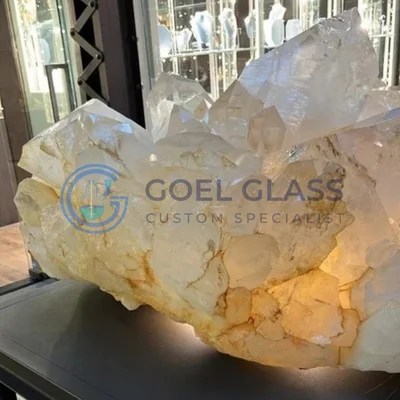
High-Purity Quartz Laboratory & Process Glassware
Goel Glass Inc. provides premium fused quartz laboratory equipment and custom process glassware engineered to withstand intense thermal shocks, corrosive chemical environments, and continuous high-temperature demands up to 1100°C.
Key Advantages of Fused Quartz (Quartz Glass)
- Exceptional Chemical Purity & Acid Resistance
- Ultra-High Softening Point and Sustained Thermal Endurance
- Extreme Thermal Shock Resistance with Near-Zero Thermal Expansion
- Broad-Spectrum Optical Transmission from Deep UV to Far Infrared
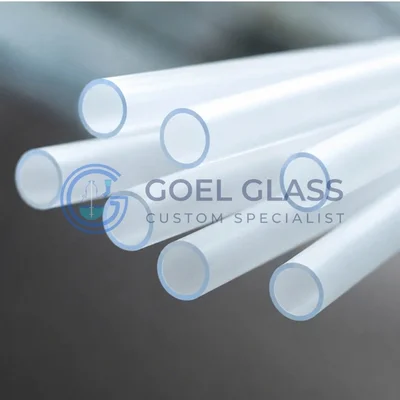
High-Purity Quartz Tubing (Milky & Clear)
Engineered from high-grade translucent or milky white fused silica (SiO2 ≥99.8%), these quartz tubes are specially tailored for heavy-duty infrared radiant heating elements and furnace worktubes. They offer uniform heat dispersion, robust mechanical longevity, and continuous resistance to temperatures above 1100°C without risk of chemical degradation.
- Material: High-purity satin / milky fused quartz (SiO2 ≥99.8%).
- Dimensions: Outer diameters ranging from 12 mm to 100 mm (custom lengths & wall thicknesses on demand).
- Applications: Optimized for commercial infrared radiators, industrial process heating, drying tunnels, and high-temp protective sleeves.
1. Quartz Laboratory Glassware
Fabricated from semiconductor-grade fused silica, our quartz laboratory glassware offers an ultra-pure, high-temperature alternative to conventional borosilicate. It eliminates sample cross-contamination, prevents ionic leaching of boron or alkali metals, and maintains exceptional dimensional stability under direct flame and severe thermal shocks.
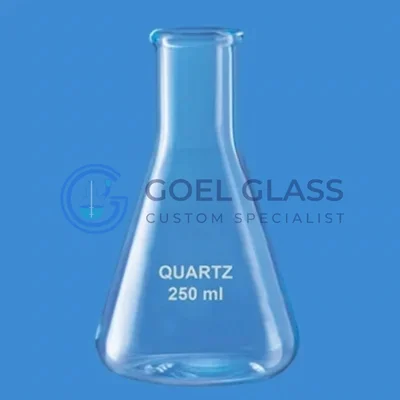
Quartz Conical Flask
Heavy-duty Erlenmeyer flask engineered for high-temperature digestions, trace-element extraction, and active reflux reactions. Retains full structural integrity and chemical neutrality even at operating temperatures exceeding 1000°C.
- Material: High-purity Quartz Glass (Fused Silica, SiO2 ≥99.99%).
- Capacity: 50ml to 2000ml (custom sizes engineered upon request).
- Application: Indispensable for semiconductor fabrication labs, environmental trace-metal analysis, and ultra-clean academic research.
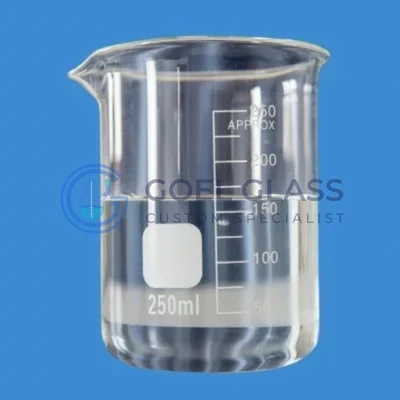
Quartz Beaker (Low & Tall Form)
Heavy-wall quartz beakers developed for intense acid fuming, high-heat boil-downs, and aggressive evaporations. Resists etching from virtually all concentrated acids while retaining crystal clarity across rapid thermal cycles.
- Material: High-purity Fused Quartz / Fused Silica.
- Capacity: 5ml to 4000ml (custom volume requirements supported).
- Design: Available in standard low form with precision pour spout, as well as tall form without spout.
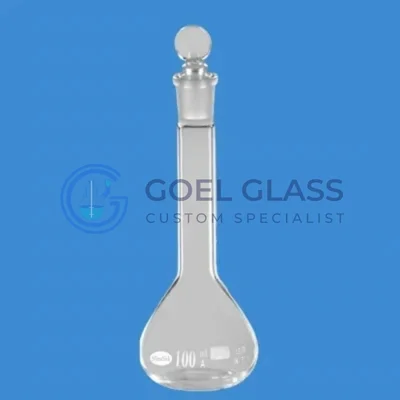
Quartz Volumetric Flask with Stopper
Class A precision calibrated volumetric vessel engineered for preparing and storing ultra-trace standard solutions. Completely avoids sample distortion or ionic leaching in sensitive ICP, ICP-MS, and AAS analyses.
- Material: Optically clear, high-purity fused quartz (SiO2 ≥99.99%).
- Capacity: 5ml to 2000ml with individually verified calibration marks.
- Components: Fitted with a precision-ground, interchangeable solid quartz stopper for a hermetic seal.
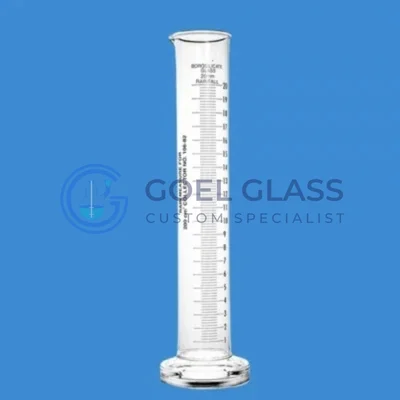
Quartz Graduated Cylinder
Laser-calibrated liquid measuring cylinder providing high reading precision, chemical inertness, and thermal stability when handling boiling corrosive acids and ultra-pure solvents.
- Material: Chemical-grade Fused Quartz (Fused Silica).
- Capacity: 5ml to 1000ml with clear permanent graduations.
- Design: Calibrated cylindrical column with reinforced base for maximum bench stability and clean-pouring lip.
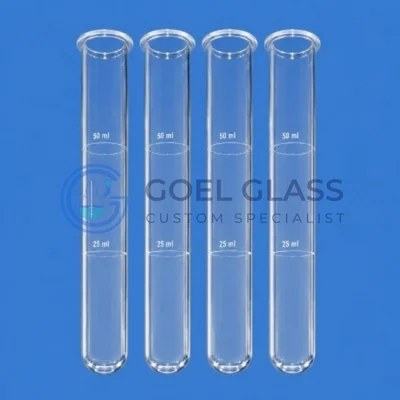
Quartz Test Tube
Heavy-wall fused silica reaction and combustion tubes engineered for direct flame heating, sample combustion, pyrolytic digestions, and spectroscopic testing without deformation or cracking at 1000°C+.
- Material: Semiconductor-grade Fused Quartz (Fused Silica).
- Capacity: 5ml to 200ml (available with plain fire-polished rims, screw threads, or custom calibrations).
- Application: High-temperature combustion analysis, acid digestion, metallurgy assaying, and trace organic decompositions.
2. Quartz Distillation & Purification Systems
Goel Glass delivers specialized fused quartz distillation assemblies, vapor condensers, and boiling flasks engineered for ultra-pure chemical separation, sub-boiling acid purification, and contamination-free water distillation. The ultra-smooth silica surface eliminates trace metal leaching and provides unmatched resistance to boiling mineral acids.
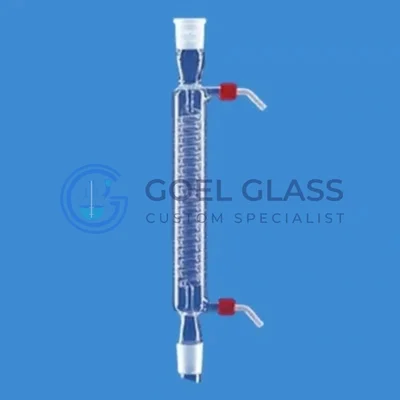
Quartz Glass Condenser
High-efficiency vapor condensing heat exchanger built with high-purity fused quartz cooling surfaces. Eliminates silica and metal contamination when condensing hot acidic vapors and high-purity distillates.
- Material: High Purity Fused Quartz (SiO2 ≥99.9%).
- Configurations: Available in Liebig (straight tube), Allihn (bulb), and Graham (coiled) designs with precision ground joints.
- Dimensions: Effective jacket lengths from 200 mm to 600 mm; custom joint configurations and lengths available.
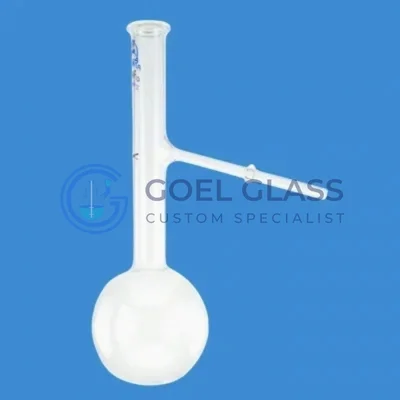
Quartz Distillation Flask
Heavy-duty thermal boiling vessel designed as the primary boiler in high-purity distillation set-ups. Features high thermal conductance and uniform wall thickness to ensure gentle, bubble-free evaporation of aggressive media.
- Material: Thermal Shock-Resistant Fused Silica Quartz.
- Capacity: 125 mL, 250 mL, 500 mL, 1L, 2 L, 3L, and 5 L.
- Design: Spherical boiling chamber with elongated vapor neck and angled side-arm; available in single-neck and multi-neck formats.
3. Quartz Furnace Ware
Designed for extreme thermal processing, our quartz furnace ware delivers remarkable dimensional stability and thermal shock tolerance inside laboratory muffle furnaces, tube kilns, and calcination ovens. Rated for continuous duty at temperatures up to 1100°C–1200°C, these components resist devitrification and chemical attack from corrosive vapors and molten fluxes.
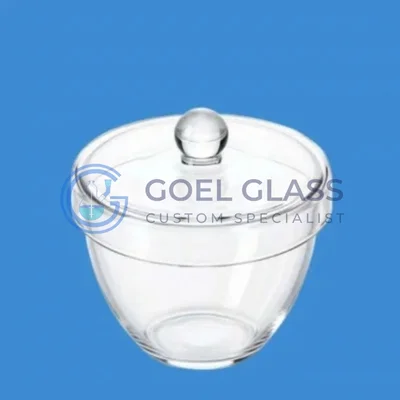
Quartz Crucible (With / Without Lid)
Precision furnace crucibles built for ash testing, mineral calcination, sintering, and metallurgical melting. Withstands direct thermal shock between 1100°C and room temperature without structural damage.
- Material: Premium fused silica fabricated from thick-walled quartz tubing.
- Types: Low-form, medium-form, and cylindrical profiles; supplied with loose or tight-fitting quartz lids.
- Sizes: Standard analytical volumes from 5ml up to multi-liter industrial furnace capacities.
- Key Applications: Ashing assays, semiconductor crystal synthesis, molten flux digestion, and catalyst preparation.
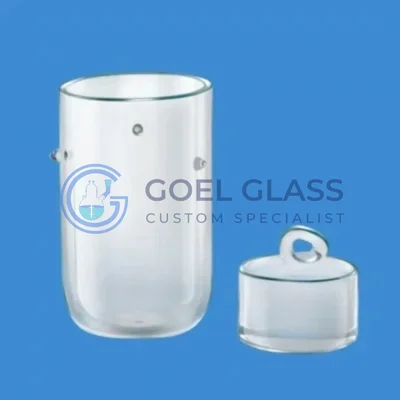
Quartz Volatile Matter Crucible
Specialized gravimetric crucible engineered to exact dimensional specifications for measuring volatile matter content in coal, coke, and carbonaceous solids according to ASTM standard test methods.
- Conforms to ASTM standard protocols for coal and carbon volatile matter testing.
- Guarantees consistent gravimetric precision during rapid 950°C furnace insertions.
- Material: High Purity Fused Quartz (SiO2 ≥99.9%).
- Design: Straight cylindrical body with a flat, stable floor and precision-fit capsule lid to maintain a reducing atmosphere.
- Sizes: Standard 10ml volume and custom analytical dimensions made to specification.
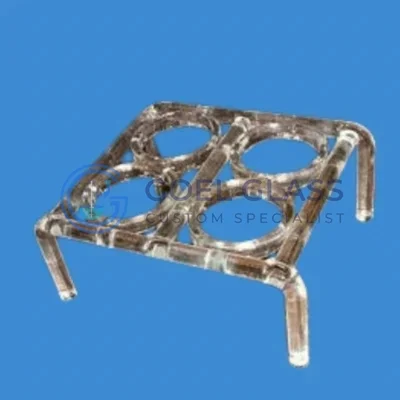
Quartz Muffle Tray (Custom Configurations)
Heavy-duty fused quartz multi-vessel carrier rack developed for safe insertion and simultaneous firing of multiple crucibles or boats inside muffle furnaces during high-heat ashing and ignition tests.
- Material: High Purity Fused Quartz plate and framework (SiO2 ≥99.9%).
- Design: Rigid flat tray with laser-cut circular wells designed to lock crucibles securely and prevent tipping.
- Configurations: Stock 4-hole, 6-hole, and 8-hole models; custom layouts tailored to match your furnace hearth and crucible diameters.
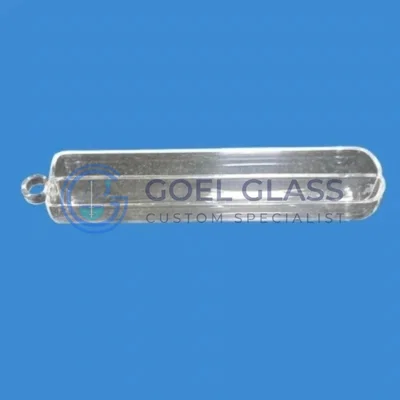
Quartz Combustion Boat
Flat-bottomed fused silica combustion boats developed for elemental analyzers (CHNS/O), carbon/sulfur determination, and tube-furnace sample baking under controlled atmospheres.
- Material: High-purity thermal-grade Fused Quartz.
- Design: Low-profile rectangular boat with reinforced walls and smooth interior for effortless sample recovery.
- Features rounded ends and an integrated manipulation handle/eyelet for safe push-rod loading.
- Sizes: Available in standard analytical lengths (50 mm to 150 mm) and custom dimensions for specialized furnace worktubes.
4. Quartz Optical & UV Applications
Goel Glass fabricates optical-grade fused quartz components engineered for maximum transmission across the ultraviolet (deep UV), visible, and near-infrared (NIR) spectra. Precision-machined and optically polished, our windows and spectrophotometer cells offer minimal light attenuation, negligible birefringence, and zero background fluorescence.
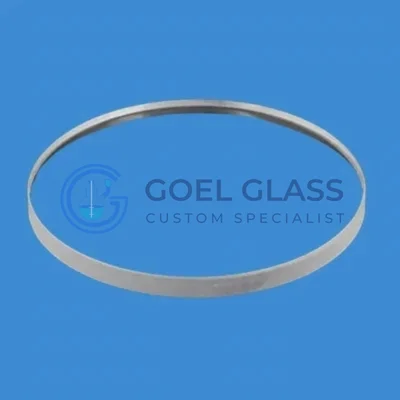
Quartz Optical Window
High-flatness optical viewports and sight glasses engineered for clear optical inspection, photochemistry reactors, plasma chambers, and UV laser systems. Exhibits outstanding transmission, heat tolerance, and chemical immunity under demanding operating conditions.
- Material: Optical-grade fused silica with low bubble class and high purity.
- Shape: Circular discs, rectangular viewports, and custom stepped flanges.
- Design: Precision double-sided optical polish with minimal wavefront distortion and high parallelism.
- Size: Available in standard diameters and thicknesses or custom fabricated to instrument drawings.
Properties of Fused Quartz (Quartz Glass)
1. Optical Transmission Characteristics
High-purity clear fused quartz is distinguished by its extraordinary optical transparency spanning from deep ultraviolet through visible wavelengths into the near-infrared spectrum. Containing only trace impurities (measured in parts per million), fused silica exhibits virtually no absorption in the critical 200–400 nm UV band, making it far superior to borosilicate or soda-lime glass for photochemical and spectroscopic duties.
Specialized doping can be applied to intentionally filter or absorb specific wavelength bands when required, such as ozone-free or UV-blocking variations for selective illumination.
Residual hydroxyl (OH⁻) radicals within the quartz matrix generate localized absorption bands within the infrared spectrum, most notably at 2.73 μm. In optical and thermal applications requiring minimal infrared attenuation, low-OH synthetic quartz grades are selected to achieve peak transmission.
Fused quartz retains structural optical integrity under intense exposure, although extreme doses of ionizing radiation or intense particle bombardment can gradually induce minor solarization.
2. Mechanical Properties
Mechanical Properties (Standard Test Values at 20°C)
Mechanical strength in quartz components is influenced by geometry, surface polish quality, and thermal gradients. For structural and pressure apparatus engineering, conservative safety factors should always be incorporated.
| Density | 2.20 g/cm3 | Bending Strength | 68 N/mm2 |
| Compressive Strength | 1150 N/mm2 | Modulus of Elasticity | 7.5 × 10⁴ N/mm2 |
| Tensile Strength | 50 N/mm2 | Mohs Hardness | 5.5 – 6.5 |
Your frequently asked question
Our high-purity fused quartz ware can be operated continuously at temperatures up to 1100°C, with short intermittent excursions up to 1250°C. Fused quartz has an annealing point of approximately 1150°C and a softening point near 1650°C.
Fused quartz has an extremely low coefficient of thermal expansion (5.5 × 10⁻⁷ /°C between 20°C and 320°C)—nearly one-sixth that of borosilicate glass. Consequently, thin-walled quartz vessels can be red-heated and immediately quenched in cold water without cracking.
Clear optical-grade fused quartz transmits light across the deep ultraviolet (down to 190–200 nm), throughout the full visible spectrum, and into the near-infrared (up to 2500 nm), making it the premier choice for UV-Vis spectroscopy, photochemical synthesis, and laser viewports.
Contamination from alkali metals (even fingerprints containing NaCl) accelerates devitrification (crystallization of amorphous silica into cristobalite) when heated above 1000°C. Quartz components must always be handled using clean lint-free cotton or powder-free nitrile gloves.
Clean with a non-alkaline detergent or high-purity isopropyl alcohol, followed by a thorough rinse with deionized (distilled) water. For stubborn residues, a dilute acid bath (such as 5–10% nitric acid) may be used (never hydrofluoric acid). Allow to air-dry in a clean, dust-free environment.